Kay Scarpetta
Kay ScarpettaKay Scarpetta is the forensic pathologist at the center of the novel’s investigative and moral tensions. Her decisive significance lies in the contrast between the precision of her work and the distortions imposed on her by media, technology, resentment, and violence: she can read blood, wounds, clothing, fingerprints, and digital timestamps, but she cannot prevent others from rewriting her identity. The story repeatedly places her between what a body reveals and what public or private narratives claim it means.
Identity and Professional Authority
Scarpetta is introduced at work on New Year’s Day, in a morgue where three tables are occupied and more bodies are on the way. Brain tissue clings to her surgical gown, blood has spattered its front, Stryker saws shriek, water runs away, and bone dust hangs in the air. Her professional world is therefore not abstract expertise but an environment of material evidence, death, and relentless labor. She recognizes from the smell alone that one patient had been drinking before using his toe to pull a gun’s trigger, demonstrating the sensory knowledge that precedes laboratory confirmation.
Her authority is also relational. Jack Fielding, her deputy, is deeply affected by the shooting of a medical student who was the same age as his daughter and, like her, a runner studying medicine. Scarpetta understands that when Fielding takes a case personally, everyone involved suffers during its processing. Her work requires emotional control not because she lacks feeling, but because feeling must be managed without allowing it to compromise the examination of the dead.
The public image attached to this authority is far less stable. A hostile Gotham Gotcha column presents her as a politician and a megalomaniac who uses CNN to disguise self-interest as public service. Scarpetta reads the attack on her BlackBerry after Bryce urges her to look at it and becomes furious at both the words and the accompanying photograph. The image shows her in a blood-spattered gown, mask, disposable cap, and bloody glove, holding a scalpel as if threatening someone; even she admits that it is unflattering, while the whitened background makes its origin impossible for her to identify. The photograph turns the same forensic authority that serves truth into material for public demonization.
Investigation Through Physical Evidence
Scarpetta’s method is defined by controlled attention. At an apartment where a woman has died, she opens her case at the door, removes a digital camera, notepad, pen, and measuring tape, distributes gloves, and first surveys the room without speaking or moving. The apartment appears immaculate, with a flowered sofa and matching chair precisely arranged around a maple coffee table, magazines fanned across it, a new Pioneer flat-screen television aligned with the sofa, silk flowers in the fireplace, and an ivory Berber carpet lying perfectly straight. The orderliness is itself evidence of the rigid, obsessive woman who lived and died there.
The scene also represents a changing forensic practice. Investigators have worn disposable coveralls and shoe covers, used electrostatic vacuums to recover traces from the glossy wooden floor, and replaced dirty black powder with forensic lights and photography. Scarpetta’s authority rests not on theatrical detection but on a procedure designed to create or destroy nothing. Her reading of the room begins with restraint, allowing disturbance, absence, and arrangement to carry meaning.
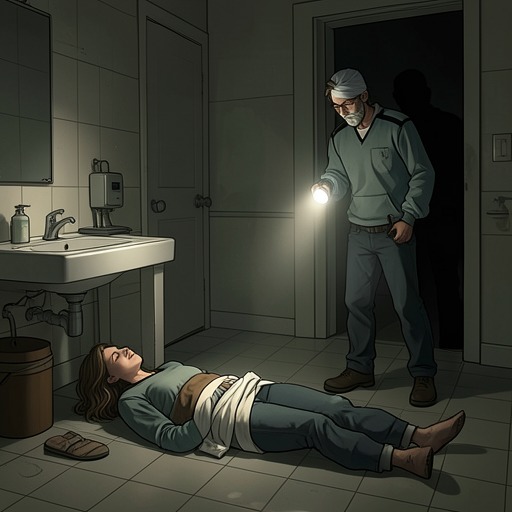
She reconstructs violence from small physical contradictions. Examining photographs of clothing in a bathtub, she infers that the attacker had already bound the victim’s wrists behind her back before removing the robe and bra. The robe has been cut open from collar to cuffs, and the bra straps have been severed. Those details suggest a rapid surprise attack, followed by restraint and undressing. Scarpetta distinguishes what the evidence establishes from what it merely permits: the injuries and clothing may indicate an intention of sexual abuse, but they do not prove intercourse.
That distinction becomes explicit when Lenora Lester reports that swabs and DNA samples have produced no evidence of sperm. Scarpetta concludes that intercourse is unlikely while insisting that the absence of intercourse does not eliminate the possibility that sexual violence was intended. She also asks whether lubricant was found in the bathroom or near the bed, because the scene might otherwise have involved an agreed sexual encounter in which beating formed part of the foreplay. Her questions keep intention, consent, and physical result separate rather than allowing one to stand in for the others.
Deception, Digital Evidence, and False Authority
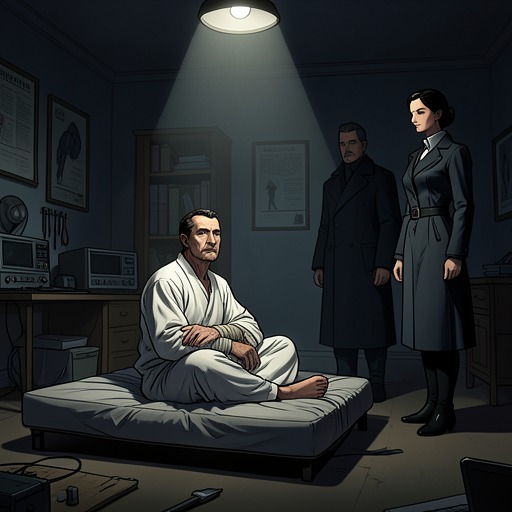
Scarpetta’s investigative world is threatened by statements that sound like her own but are not hers. Oscar Bane tells her that she often quotes Oscar Wilde and says that no one commits a crime without doing something foolish, except that Scarpetta herself could commit a perfect crime. She cannot remember ever making either claim and regards the supposed remark as both foolish and repellent. Her examination of thin, crescent-shaped nail marks on Oscar’s left shoulder proceeds against a second danger: testimony that has appropriated her language and manufactured a false version of her thinking.
The digital investigation produces a sharper reversal. Lucy discovers that the scarpetta-six-twelve account composed an email at 8:19 the previous evening but did not send it. Because the message was written while Terri’s body was already likely in the morgue, and because the account’s activity cannot be reconciled with either Terri or Oscar, the email excludes both of them as the person behind that identity. Scarpetta’s name has become an online mask whose activity continues independently of the people initially suspected of wearing it.
The Gotham Gotcha website itself appears corrupted or crashed when Benton examines it with Scarpetta. Buildings are dark, red lightning crosses the sky, and the enormous Rockefeller Center Christmas tree appears upside down in Central Park. The grotesque visual breakdown mirrors the collapse of the site’s authority: a platform that has presented accusation as revelation is revealed as vulnerable, unstable, and manipulable.
Relationships, Threat, and Public Misrepresentation
Scarpetta’s closest professional relationships carry histories that outsiders can weaponize. Benton admits that he is furious at the woman whose actions caused harm, even though he recognizes that she was the victim and had not invited what happened. He understands why a friend might let a drunk, confused colleague into her home, especially after years of working together, and rejects the idea that knowledge of someone’s feelings makes the victim responsible. Scarpetta’s case therefore unfolds within a network where affection, loyalty, resentment, and responsibility cannot be cleanly separated.
The hostile column attempts to reverse that moral order. It claims that Scarpetta could be raped like any other woman and that, in this instance, the victim should be blamed because she supposedly ignored, mistreated, and humiliated Pete Marino until he lost control while drunk in Charleston. The rhetoric converts an alleged assault into punishment and makes Scarpetta responsible for the violence directed against her. Its force comes not from evidence but from the counterfeit authority of a voice that seems to know her history.
The plot repeatedly places Scarpetta beside danger without reducing her to helplessness. When Pete Marino climbs a narrow ladder to a roof, frightened by heights since leaving Charleston, he expects the structure to collapse beneath him. At the top he finds Mike Morales lying prone with a revolver, and for a moment neither moves. Morales then recognizes him and accuses him of stupidity; Marino replies that he thought Morales was the serial killer. Scarpetta is not present in that confrontation, but the encounter clarifies the investigative atmosphere surrounding her: identities are mistaken, surveillance is concealed, and a colleague may appear indistinguishable from the enemy.
Change, Recognition, and Narrative Role
Scarpetta’s position changes as physical evidence overturns the stories offered about her and about the murders. Shoe impressions on the toilet lid in Eva Peebles’s bathroom match the shoes Oscar wore when, by his account, he found Terri’s body. More damaging still, fingerprints on a glass lamp removed from the ceiling and placed in the bathtub belong to Oscar. An arrest warrant follows, and the public language escalates from “dwarf murderer” to “dwarf monster,” while police across the country search for him and reports fuel fear of small people, particularly young men. Scarpetta’s discipline is set against this sensational transformation of evidence into stigma.
Her investigative stance also changes from defensive anger toward a more complicated understanding of Terri Bridges. Scarpetta learns that Terri wrote the two New Year’s Day columns on December 30 and arranged for them to be sent automatically to Eva Peebles after her death. Terri had deleted more than a hundred emails from the supposed correspondence with Scarpetta, not because she anticipated dying but because she had committed an anonymous crime against the person she revered. By erasing the correspondence, Terri tried to sever the disgraced heroine from her life while preserving the secrecy of her own actions.
Once the anonymous author is identified, Scarpetta realizes that she had never been inside the apartment where the cruel, vindictive columns were written, yet she feels pity for Terri. Terri believed that she had received heartless, humiliating emails from her heroine and could no longer endure the imagined rejection. She therefore used an alter ego to discredit Scarpetta publicly, treating Scarpetta’s supposed contempt as the final injury in a lifetime of humiliation. Scarpetta can understand why Terri hated her without accepting Terri’s version of events, and that capacity to hold admiration, injury, hatred, and responsibility together is one of her most important forms of development.
Narrative Significance
Scarpetta functions as the novel’s standard of evidentiary reality. Bodies, clothing, fingerprints, timestamps, and spatial arrangements repeatedly challenge the seductive but unreliable narratives circulating through Gotham Gotcha, fabricated correspondence, and emotionally charged testimony. Her method does not promise emotional neutrality; rather, it makes room for anger, pity, and fear while refusing to let them replace proof.
Her recurring conflict is consequently larger than the identification of a killer. Scarpetta’s public persona is copied, attacked, eroticized, and blamed, while her professional practice insists on the difference between appearance and fact. The bloodied image that makes her look monstrous, the invented quotations placed in her mouth, and the columns that recast violence as deserved all expose the same vulnerability: authority can be appropriated by anyone who controls the image. Scarpetta’s answer is not a counter-image but a patient return to the trace—the wound, the garment, the print, the time stamp, and the contradiction that a manufactured story cannot finally conceal.